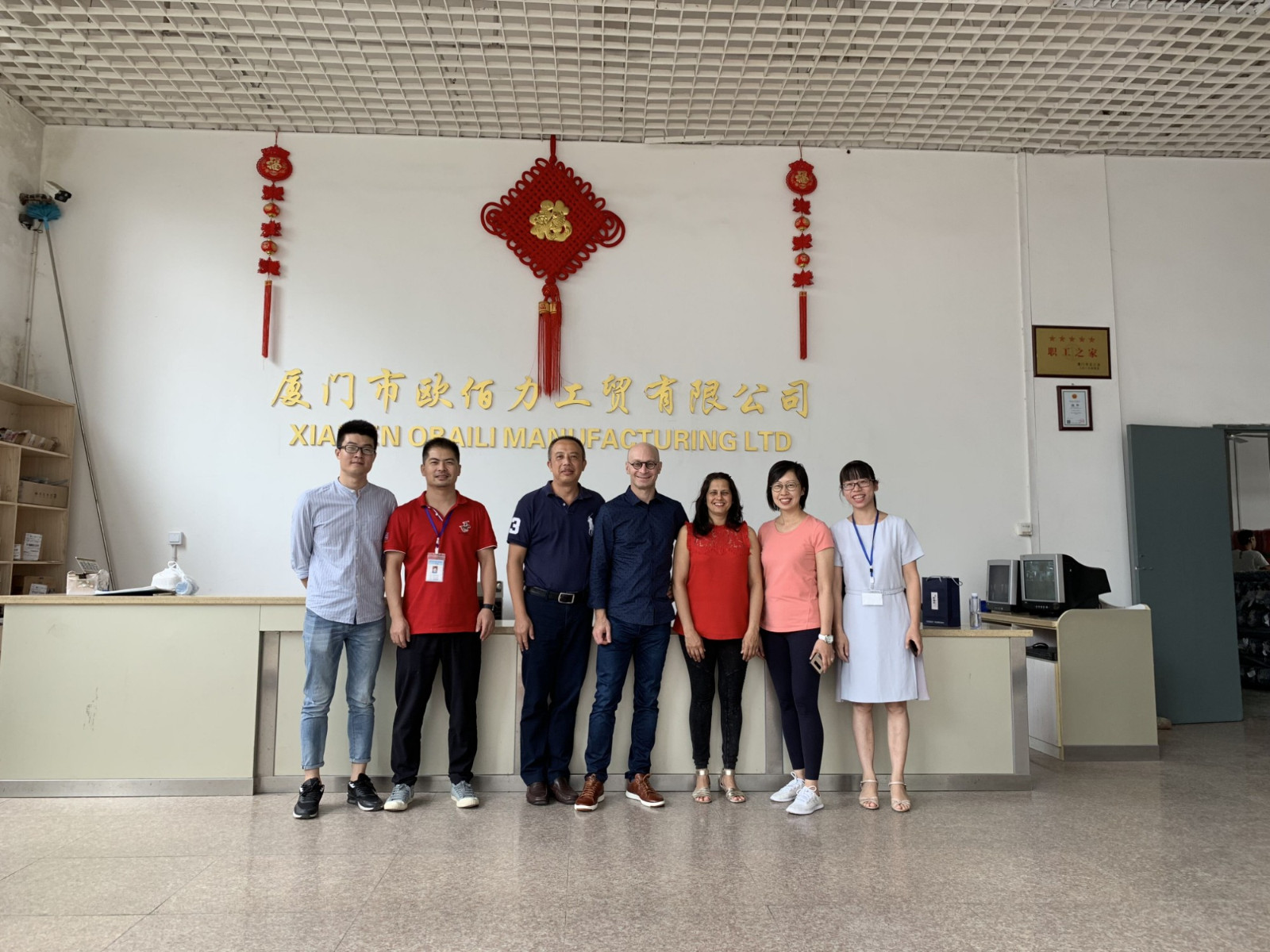




Overseas customers come to visit our company
We recieve more than 100 oversea clients/buyers's visit annually, this client from South Africa, which is a top promo company in this country, they placed orders for us more than 300,000 USD every year.
Overseas customers come to visit our company, and these face-to-face encounters represent something that no video call, catalog, or trade show booth can fully replicate—the moment when a supplier relationship transitions from transactional to transformational.
After two decades of manufacturing cooler bags for global markets, we've learned that the factory visit is where trust is either cemented or shattered. It's the ultimate audit, one that no certification body can conduct with the same authority as a buyer standing on our production floor, watching their order take shape, asking the questions that keep them awake at night.
The visit typically begins long before the plane lands. Our team coordinates airport pickup, hotel arrangements, and a detailed itinerary tailored to the client's priorities. Some arrive with technical checklists—quality managers who want to see our EDXRF spectrometer in action, who ask to review the last six months of batch test records, who request unannounced spot checks of work-in-progress inventory. Others come with commercial concerns—procurement directors calculating true capacity, assessing whether our 12 production lines can absorb their growth trajectory, evaluating whether our dual-factory model in Xiamen and Cambodia represents genuine resilience or merely marketing rhetoric.
We welcome both approaches. In fact, we encourage the skeptical ones.
The factory tour itself follows a deliberate choreography designed to reveal rather than conceal. We start not with our newest equipment or our cleanest line, but with incoming quality control—where raw materials are inspected, tested, and either accepted or rejected before they ever touch a production machine. This is where visitors understand that our quality culture isn't a final inspection checkbox; it's the first gate in a multi-layered system. They see fabric rolls weighed for gsm consistency, color-matched against Pantone standards under calibrated lighting, and screened for heavy metals with the same EDXRF equipment that generates the reports they receive with their shipments.
From IQC, we move to the cutting room. The computerized nesting software draws audible reactions—buyers who've struggled with fabric waste in other facilities watch our GERBER system achieve 94% utilization, translating directly to cost efficiency they hadn't modeled. We explain how manual cutting still handles low-MOQ custom orders, preserving flexibility that pure automation would sacrifice. This balance between scale and agility is where Obaili differentiates itself from factories that can do one or the other, but not both.
The sewing floor is where the visit gets personal. Visitors see 220+ workers, many with tenures exceeding a decade, operating machines with the unconscious competence that comes from repetition refined into craft. We introduce them to line supervisors who can articulate quality standards in English, who can explain why stitch density matters for seam strength, who can demonstrate the difference between a pass and a fail in real time. These aren't staged performances—they're the everyday reality of a workforce trained to understand that their output represents not just Obaili, but the brands and retailers who entrust us with their reputation.
Quality control stations punctuate the tour. The tensile tester pulling seams to 50 kilograms. The drop test rig simulating the abuse a cooler bag endures in shipping and handling. The thermal chamber validating that our insulation claims hold up under controlled conditions—and the documentation proving it. Visitors who've received test reports remotely now see the equipment that generates them, handled by technicians who can explain methodology, limitations, and interpretation.
The Cambodia factory discussion comes next, usually over lunch in our visitor center. We walk through the strategic decision to diversify geographically—not as a cost play, but as a risk management imperative. The GSP tariff advantages for US-bound goods. The 14–16 day shipping time to West Coast ports versus 18–22 from China. The operational redundancy that saved three major orders during the 2021 Xiamen port disruption. Buyers contemplating their own supply chain vulnerabilities recognize the value proposition immediately.
Afternoon sessions vary by visitor type. Design-focused clients work with our ODM team, reviewing sketches, manipulating 3D renderings, and watching sample production on dedicated lines. Commercially oriented visitors dive into costing—BOM breakdowns, labor rate structures, overhead allocation, and the transparency that lets them understand exactly what they're paying for. Sustainability-minded buyers audit our RPET supply chain, review GRS documentation, and calculate the carbon implications of different shipping configurations.
The visit concludes with a candid conversation—often the most valuable hour of the entire trip. We ask what concerns remain unaddressed. We share our own assessment of where the partnership could deepen, where we need to improve, and what investments we're planning to stay ahead of their evolving requirements. These aren't sales pitches; they're strategic dialogues between organizations that recognize mutual success requires mutual understanding.
What visitors take home isn't just a memory of clean floors and organized workstations. It's a mental model of Obaili that replaces abstraction with specificity. When they receive a production update six months later, they picture the line supervisor they met. When they review a test report, they visualize the equipment that generated it. When they negotiate pricing, they understand the cost structure behind our quotes. This contextual knowledge transforms them from customers into partners—from buyers who select suppliers to collaborators who co-develop solutions.
The impact on conversion is measurable. Visitors who complete factory tours convert to first orders at rates exceeding 80%, compared to 35% for remote-qualified leads. Their average order values trend 40% higher, reflecting the confidence to commit to larger programs. Their retention rates extend beyond five years, built on the trust that only firsthand verification can establish.
Of course, not every prospect can visit. Distance, budget, and time constraints keep many relationships virtual. For these, we've invested in video factory tours—live, unscripted, with real-time Q&A. We've built VR walkthroughs that let buyers navigate our facilities from their desks. We've coordinated third-party inspections that provide independent validation when personal presence isn't feasible. These alternatives work, but they work differently. They supplement rather than replace the transformative power of standing in the same space, shaking hands, and sharing a meal.
The overseas customer visit also reshapes our own organization. Preparing for audits forces discipline. Knowing that any corner of the facility might be inspected keeps standards elevated. The questions visitors ask—sometimes challenging, occasionally unexpected—surface improvement opportunities we might have overlooked. A European buyer's inquiry about carbon footprint tracking led directly to our current emissions calculation program. An American retailer's concern about packaging recyclability accelerated our FSC-certified carton transition.
In the broader narrative of global trade, these visits represent something increasingly rare: human connection in an automated world. As algorithms optimize shipping routes and AI negotiates contract terms, the factory visit remains stubbornly analog. It requires physical presence, cultural navigation, and the kind of relationship-building that happens over tea, not Slack messages. This isn't nostalgia—it's competitive advantage. The suppliers who invest in these connections, who make the visit memorable and meaningful, build loyalty that transactional efficiency cannot replicate.
Looking ahead, we're expanding our visitor infrastructure. A dedicated guest center with real-time production dashboards. Interpretation services for non-English speakers. Pre-visit digital briefings that maximize on-site time. Post-visit follow-up protocols that convert impressions into action. We're also exploring reciprocal visits—sending our team to customer headquarters, warehouses, and retail floors to understand how our products perform in their ecosystems.
Overseas customers come to visit our company, and every arrival is an opportunity. An opportunity to prove claims that marketing materials merely assert. An opportunity to transform skepticism into confidence. An opportunity to build the kind of partnership that survives tariffs, pandemics, and market disruptions because it's rooted in mutual understanding rather than mere convenience.
Twenty-one years of manufacturing has taught us that the best contracts aren't signed in conference rooms. They're signed on factory floors, after the questions have been asked and answered, after the doubts have been addressed with evidence rather than assurances. When a buyer boards their return flight, we want them carrying more than a sample and a brochure. We want them carrying certainty—that Obaili is the partner they can trust with their brand, their customers, and their future growth.