




California Proposition 65 and PFAS: Verification Steps Before Q4 Shipments

Two California Requirements That Gate Q4 Shipments
Proposition 65 and PFAS restrictions both gate textile articles before Q4 shipments reach the market. Proposition 65 requires clear and reasonable warnings before consumer exposure to listed chemicals. PFAS restrictions limit intentionally added per- and polyfluoroalkyl substances in textile articles and packaging. Q4 shipments face the tightest deadlines.
What Proposition 65 Actually Requires
Proposition 65, formally the Safe Drinking Water and Toxic Enforcement Act of 1986, is administered by California's Office of Environmental Health Hazard Assessment. Proposition 65 requires a warning where exposure to a listed chemical exceeds the applicable Safe Use Level. Warning text must name at least one listed chemical, state that the chemical is known to the State of California to cause cancer or reproductive harm, and include the P65Warnings.ca.gov address. Since December 2020, electronic label rules require the warning on the product listing page before purchase, not only on physical packaging. Enforcement occurs primarily through private actions, with penalties assessed per day per violation, and the importer of record carries responsibility regardless of manufacturing location.
Safe Use Levels and Why They Change
Safe Use Levels, expressed as No Significant Risk Levels for carcinogens and Maximum Allowable Dose Levels for reproductive toxicants, define the exposure threshold below which no Proposition 65 warning is required. California's environmental health office revises Safe Use Levels as toxicological data develops, and revisions can lower thresholds so that formulations previously exempt now require warnings. This means Proposition 65 status can change without any change to the product formulation. Textile articles receive particular attention, and Q4 shipments must reflect current thresholds.
PFAS Restrictions on Textile Articles
California's PFAS framework applies staged organic fluorine limits to covered products. Textile articles are prohibited where PFAS are intentionally added for a functional or technical effect, or where total organic fluorine reaches 100 parts per million, effective from 1 January 2025. The threshold tightens to 50 parts per million from 1 January 2027, placing Q4 shipments scheduled to arrive before that date in a narrowing compliance window. PFAS restrictions also apply to food packaging, and juvenile products fall under a separate organic fluorine limit adopted in 2023.
Why Compliance Testing Must Cover Components
Compliance testing limited to the main shell material misses the components where problems concentrate. PFAS restrictions apply at the assembled product level. Proposition 65 exposure assessment for textile articles depends on which components contain listed substances. Textile articles deserve the closest review. Component-level compliance testing is the only reliable approach, so compliance testing should reach every component that touches the consumer before Q4 shipments can proceed.
Verification Steps Before Q4 Shipments
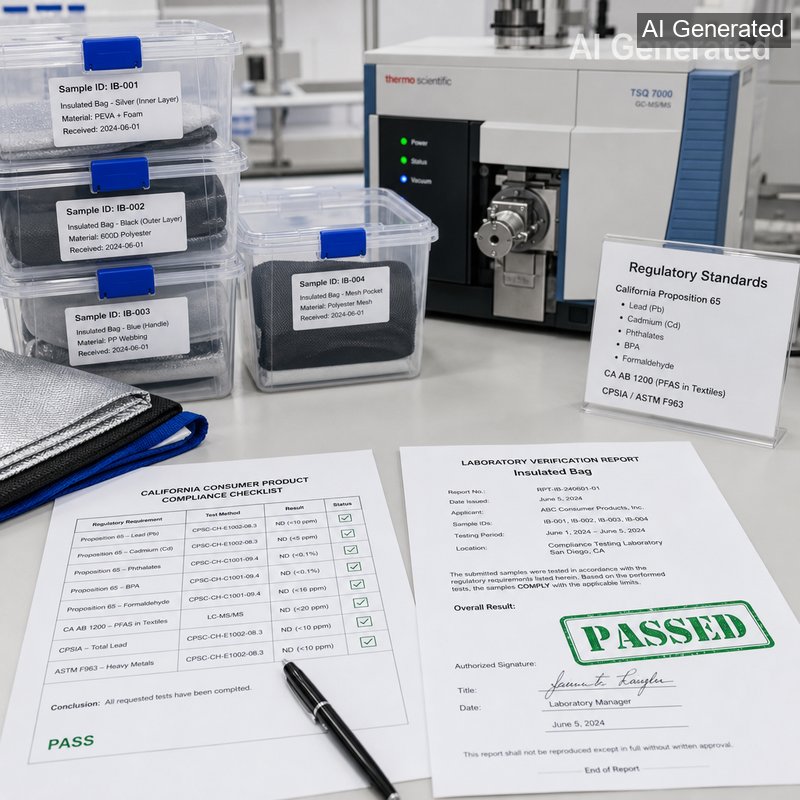
Six verification steps should complete before Q4 shipments leave the factory. Inventory every component against the current Proposition 65 list. Confirm any water-repellent treatment and request PFAS declarations. Obtain total organic fluorine results for textile articles where PFAS cannot be excluded by declaration. Verify listing pages carry Proposition 65 warnings before products become purchasable. Confirm warning obligations reflect current Safe Use Levels. Retain component-level documentation so later Q4 shipments need only verify changes. Compliance testing should therefore start before production release.
Coordinating Compliance Testing with Production
Compliance testing and production scheduling interact directly, and Q4 shipments provide limited slack, so compliance testing should start before assembly. PFAS restrictions and Proposition 65 obligations both reward early action, and Q4 shipments reward early testing.
Conclusion
Proposition 65 and PFAS restrictions impose independent obligations. Proposition 65 warning duties turn on exposure thresholds that shift as Safe Use Levels are revised, while PFAS restrictions tighten to 50 parts per million total organic fluorine for textile articles from January 2027. Verifying Proposition 65 status and PFAS declarations before production release protects Q4 shipments from avoidable delay.*For more information about Obaili's cooler bag manufacturing capabilities, visit www.obaili.net.*