
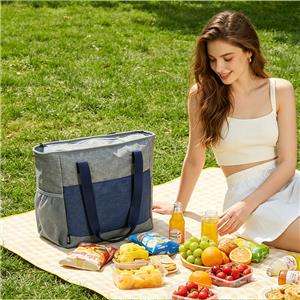
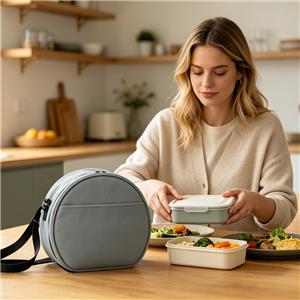

What is the standard for medical cooler bag FDA
What Is the Standard for Medical Cooler Bag FDA?
For buyers sourcing Cooler Bags intended for pharmaceutical or medical cold chain applications, understanding the FDA regulatory framework is essential. Unlike standard food delivery bag or Delivery Bags products, insulated delivery bags used for transporting temperature-sensitive medical goods—vaccines, biologics, or clinical samples—must meet specific compliance criteria under U.S. Food and Drug Administration (FDA) regulations
Defining the Medical Cooler Bag Under FDA Regulations
The FDA does not classify "medical cooler bags" as a standalone product category. Instead, depending on the intended medical use, these products may be regulated under existing device classifications:
For most medical cooler backpack and insulated delivery bags products used in logistics rather than direct patient contact, the relevant classification is 21 CFR § 880.6050 (Ice Bag) , provided the bag is designed to be filled with ice or gel packs and applied to body surfaces .
Key Compliance Requirements for Medical Cooler Bags
General Controls for Class I Devices
Medical Cooler Bags classified under 21 CFR § 880.6050 must comply with FDA's General Controls, which include:
Establishment Registration: The manufacturer must register their facility with the FDA
Device Listing: Each device type must be listed with the FDA
Labeling Requirements: Labels must comply with 21 CFR Part 801, including intended use statements
Adulteration/Misbranding Prohibitions: The device cannot be adulterated or misbranded under FD&C Act provisions
QMS Exemptions for Non-Sterile Devices
An important distinction exists for ice bags not labeled or represented as sterile:
"If the device is not labeled or otherwise represented as sterile, it is also exempt from the current good manufacturing practice requirements of the quality management system regulation in part 820 of this chapter, except for requirements concerning records and complaint files."
This means standard insulated delivery bags intended for cold chain logistics may have reduced QMS documentation requirements compared to sterile medical devices. However, records and complaint files under § 820.35 remain mandatory .
Premarket Notification Exemption
Class I ice bags are exempt from the premarket notification (510(k)) procedures under subpart E of part 807 . This exemption significantly reduces the regulatory burden for manufacturers of medical Cooler Bags compared to Class II or III devices.
Material Safety and Food Contact Compliance
For food delivery bag and medical bag applications, FDA food contact material regulations (21 CFR Parts 170-199) apply to any cooler backpack component that may contact consumable products. Key material requirements include:
Inner linings: Must be made from FDA-compliant materials (PEVA, TPU, or food-grade PVC)
No BPA or phthalates: Restricted under food contact regulations
Migration testing: Materials must not transfer harmful substances to contents
21 CFR § 177.1520: Olefin polymers standards applicable to certain bag components
Xiamen Obaili: Customization Strength for Medical-Grade Compliance
Xiamen Obaili Manufacturing Ltd., established in 2004, has successfully delivered millions of promotional bags to the USA and EU. Their customization strength provides a strategic advantage for buyers requiring FDA-compliant Cooler Bags for medical or pharmaceutical cold chains.
Quality Management Foundation
Obaili's existing certifications align with medical device supply chain requirements:
| Certification | Status | Relevance to FDA Compliance |
|---|---|---|
| ISO 9001:2015 | Active | Quality management foundation |
| BSCI Full Monitoring | ID: 24-0267156 (QIMA) | Supply chain transparency |
| SMETA 4-Pillar | Passed (Bureau Veritas, 2019) | Social compliance for medical logistics |
Material Control Through Vertical Integration
Obaili maintains vertical integration—one factory investor is a fabric manufacturer, enabling direct control over raw material sourcing. For medical Delivery Bags and insulated delivery bags, this integration ensures:
Traceable material supply chains: Full documentation from fabric production to finished bag
FDA-compliant lining options: PEVA, TPU, and food-grade PVC meeting 21 CFR standards
Third-party testing capabilities: Material test reports available upon request
Customization Capabilities for Medical Applications
Obaili's proven customization process—demonstrated in a 2025 Australian project for 3,000 cooler backpack units—includes:
Three rounds of sampling to verify thermal performance specifications
YKK waterproof sealed zippers preventing contamination ingress
25mm high-density insulation foam achieving 6.8 hours thermal retention
Food-grade PEVA inner liners meeting FDA contact standards
Indigenous pattern printing while maintaining material compliance
Quality Control Protocol
For every food delivery bag and Cooler Bags order, Obaili implements:
Pre-production technical seminars freezing specifications before manufacturing
100% pre-shipment inspection including water injection leak tests
Load-bearing vibration testing for cooler backpack strap systems
Full documentation packages for regulatory compliance
Pathway to FDA Compliance for Medical Cooler Bags
For buyers sourcing medical-grade Delivery Bags from Obaili or any supplier, the following verification protocol is recommended:
Determine Classification: Confirm whether your insulated delivery bags falls under 21 CFR § 880.6050 (ice bag) or another classification
Verify Establishment Registration: Request the manufacturer's FDA registration number
Obtain Material Compliance Documentation: FDA food contact declarations for all inner linings
Review Labeling: Ensure intended use statements do not claim unsubstantiated medical benefits
Establish Complaint File Procedures: Even QMS-exempt devices require complaint records