


PPWR Compliance Guide for Cooler Bag Exporters

What PPWR Is
Regulation (EU) 2025/40, the Packaging and Packaging Waste Regulation, entered into force on 11 February 2025 and applies from 12 August 2026. PPWR compliance obligations bind every EU member state directly. PPWR compliance replaced Directive 94/62/EC. Cooler bag exporters must understand PPWR compliance before the next container ships.
Which Bags Fall Within Scope
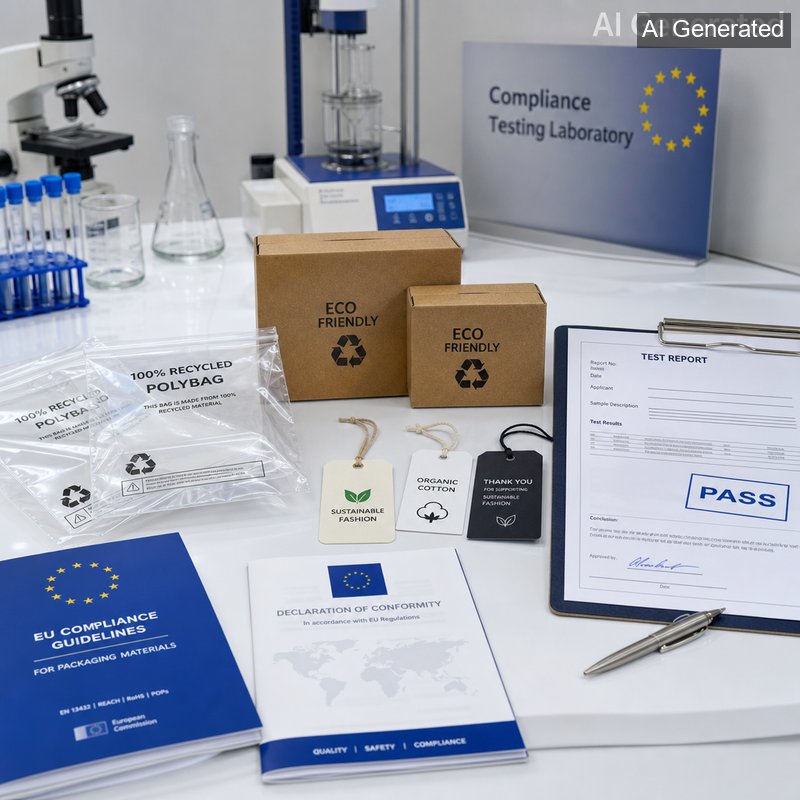
Bags sold as finished consumer products fall outside EU packaging rules. A cooler bag bought by an end consumer is a product, not packaging. Shopping bags, carrier bags, and delivery bags function as packaging and carry full PPWR compliance obligations. EU packaging rules cover polybags, master cartons, hang tags, adhesive labels, printing inks, and coatings. EU packaging rules also govern recycled content documentation. Packaging requirements assessments must examine the complete shipment configuration. Packaging requirements apply to every component.
Article 5 Heavy Metal Limits
Article 5 sets binding heavy metal limits for packaging placed on the European market. The combined concentration of lead, cadmium, mercury, and hexavalent chromium must not exceed 100 mg/kg. Heavy metal limits operate as a combined ceiling rather than an individual allowance per substance. Heavy metal limits form part of wider packaging requirements covering the full specification. Heavy metal limits apply to inks, adhesives, coatings, and closures.
PFAS and Food-Contact Restrictions
Food-contact packaging faces further restrictions alongside heavy metal limits. From 12 August 2026, non-polymeric PFAS must stay below 25 ppb per individual substance and 250 ppb combined. Total fluorine content cannot exceed 50 mg/kg. PPWR compliance covers food-contact formats in addition to general packaging. PFAS ceilings sit alongside the heavy metal limits that EU packaging rules impose. Packaging requirements for insulated food transport now address chemical composition as well as physical design.
Conformity Documentation
PPWR compliance demands documented evidence rather than supplier assurances. Manufacturers must complete conformity assessment and prepare Annex VII technical documentation with an EU declaration of conformity. Recycled content adds complexity because recovered materials may carry legacy substances. Packaging requirements supporting recycled content claims must address chemical composition. Recycled content evidence belongs in the same conformity file as heavy metal limits testing. Recycled content verification depends on supplier feedstock data.
How Obaili Supports PPWR Compliance
Obaili has guided European customers through PPWR compliance verification. The manufacturer supplies packaging that satisfies EU packaging rules for specification, and provides testing evidence covering three heavy metals: lead, cadmium, and mercury. Those three heavy metals undergo analysis at the in-house laboratory facility. Hexavalent chromium testing requires specialized analytical equipment. Obaili coordinates hexavalent chromium analysis through professional third-party institutions to complete the four-metal verification required under Article 5. This arrangement delivers complete heavy metal limits documentation without compromising production turnaround times.
Timeline Beyond 2026
PPWR compliance obligations expand after 2026. Extended producer responsibility registries become relevant from 2027. Material composition labelling and empty-space limits arrive from 2028, followed by reusable packaging labels and QR codes from 2029. Deposit return systems with a 90% collection target apply from 2029. The major wave arrives from 2030, introducing recyclability grades, recycled content targets, and restrictions on single-use formats. Recycled content thresholds will rise across material categories, and recycled content verification will tighten with each review cycle. EU packaging rules will then extend into recyclability grading.
Preparation Steps
Cooler bag exporters should act on four fronts. Inventory every packaging component used in shipments, including polybags, cartons, labels, and printing materials. Request material composition data and test reports rather than accepting general declarations. Verify heavy metal limits across all components, recognising that inks and adhesives frequently contribute contamination. Strong packaging requirements evidence protects European market access, and packaging requirements now influence supplier selection alongside EU packaging rules.
Conclusion
PPWR compliance reshapes EU packaging rules for cooler bag exporters. Understanding coverage, heavy metal limits, and conformity documentation determines market access. Obaili provides compliant packaging support alongside testing for three heavy metals through in-house laboratory analysis, with hexavalent chromium verification handled by professional partner institutions. Recycled content requirements tighten through 2030, and recycled content thresholds rise with each regulatory wave. EU packaging rules demand documented proof rather than verbal assurance. Exporters addressing PPWR compliance now will meet those packaging requirements from a position of readiness.
*For more information about Obaili's cooler bag manufacturing capabilities, visit www.obaili.net.*