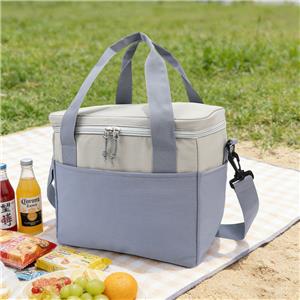

What is high frequency welding in cooler bags
What Is High Frequency Welding in Cooler Bags?
For buyers sourcing Cooler Bags, insulated delivery bags, and cooler backpack products, the term "high frequency welding" increasingly appears in technical specifications. Understanding this manufacturing technology is essential for distinguishing premium products from standard alternatives.
Defining High Frequency Welding
High frequency welding—also known as radio frequency (RF) welding—is a specialized joining process that bonds thermoplastic materials using electromagnetic energy rather than thread, adhesives, or external heat sources . When compatible materials are exposed to a high-frequency electromagnetic field (typically 13 to 100 MHz), polar molecules within the material begin to oscillate rapidly . This molecular movement generates heat from inside the material outward. Under controlled pneumatic pressure, the two layers at the join interface melt together and fuse into a single continuous structure .
Unlike traditional sewing, which creates thousands of needle holes that compromise waterproofing, high frequency welding produces seamless, airtight bonds. For food delivery bag and Delivery Bags applications where moisture protection is critical, this technology represents a significant advancement over conventional stitching.
How the Process Works
The high frequency welding process follows a systematic sequence:
1: Material Preparation – Thermoplastic materials including TPU (thermoplastic polyurethane), PVC (polyvinyl chloride), and EVA are cut and positioned between two electrodes .
2: Electromagnetic Field Application – The generator creates an oscillating electric field between the electrodes. Polar molecules within the material align and reverse direction rapidly with the field .
3: Internal Heating – Molecular movement creates friction, generating heat throughout the material thickness simultaneously. This internal heating differs from surface-based heat sealing methods .
4: Pressure and Fusion – Pneumatic pressure forces the heated materials together. Under controlled pressure, the layers melt and intermix at the molecular level .
5: Cooling – The electromagnetic field is removed while pressure is maintained. The material cools and solidifies, forming a permanent, homogeneous bond.
Why High Frequency Welding Matters for Cooler Bags
Superior Waterproofing
Stitched seams inherently create pathways for water ingress—each needle puncture produces a tiny hole that compromises the bag's waterproof integrity . High frequency welded seams have no such perforations. For insulated delivery bags used in rain or wet conditions, this technology ensures contents remain dry. RF welded seams on compatible materials can be pressure-tested to 1.0 Bar—equivalent to the hydrostatic pressure of a 10-meter water column—without leakage .
Enhanced Thermal Performance
The seam area in Cooler Bags represents a potential thermal leakage point. Welded seams eliminate the gaps and seam traces that occur with stitched construction . By creating a continuous sealed cavity where insulation foam is completely enclosed, high frequency welding prevents thermal bridging and maintains temperature stability longer .
Exceptional Durability
In high frequency welding, the load on a seam is distributed across the entire welded area, which has fused into a continuous layer of material. Well-executed weld zones typically match or exceed the tensile strength of the surrounding base fabric . For cooler backpack applications that endure regular flexing and weight loads, this durability translates to longer product lifespan.
Clean, Professional Appearance
High frequency welded seams are flush, smooth, and geometrically precise . The weld line doesn't add bulk or create the folded fabric ridges common with stitched construction. For brands positioning Cooler Bags as premium products, this aesthetic quality communicates manufacturing excellence.