
US Cooler Bag Market Size and Consumer Trends Analysis 2026

Market Size and Growth Metrics
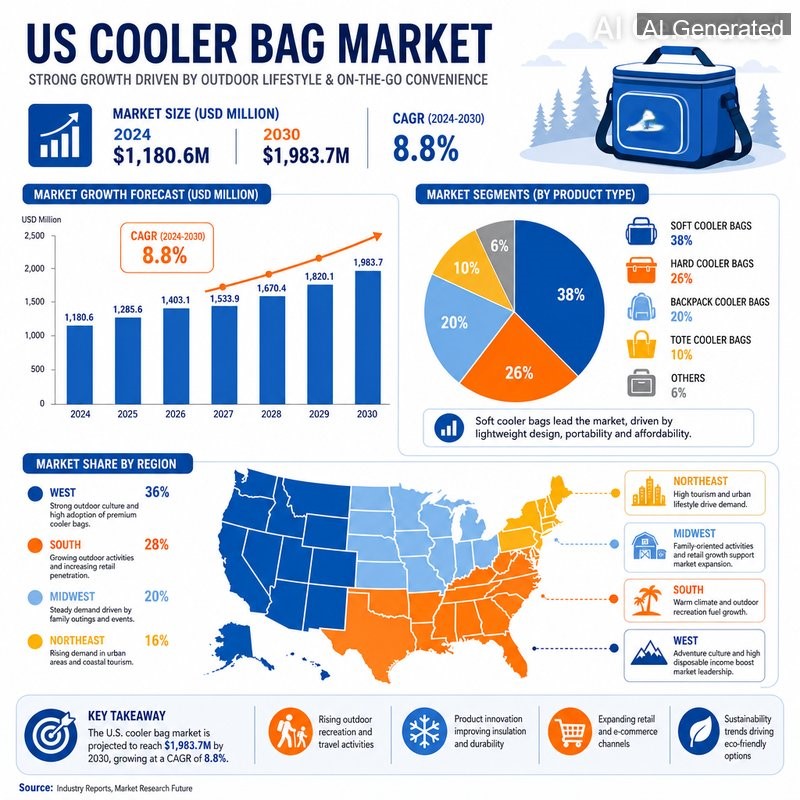
Current US cooler bag market valuation reaches $2.8 billion annually, representing 12% year-over-year growth. Soft-sided cooler bag segments account for 65% of total market size, with hard-sided alternatives comprising the remaining 35%. The outdoor recreation category generates 45% of cooler bag sales, followed by food service (25%), promotional products (15%), and healthcare applications (10%). Retail forecast projections indicate market size expansion to $3.5 billion by 2028.
Consumer Trends Driving Demand
Several consumer trends shape US cooler bag market evolution. Sustainability consciousness influences purchasing decisions, with 68% of consumers preferring eco-friendly materials. Premiumization trends drive demand for higher-quality products commanding price premiums. Convenience preferences favor lightweight, collapsible designs for easy storage and transport. Aesthetic expectations rise as cooler bags transition from utilitarian items to fashion accessories. These consumer trends create opportunities for differentiated product development.
Distribution Channel Analysis
Traditional retail channels including sporting goods stores and mass merchandisers maintain significant cooler bag market share. E-commerce platforms experience fastest growth, with Amazon and direct-to-consumer brands capturing increasing percentages. Specialty outdoor retailers including REI and Bass Pro Shops serve enthusiast segments with premium product selections. Promotional products distributors represent stable B2B wholesale channels for corporate and institutional buyers. Each channel exhibits distinct consumer trends and pricing expectations.
Seasonal Demand Patterns
US cooler bag market demand follows predictable seasonal patterns. Peak sales occur during April through July, aligning with outdoor recreation season commencement. Secondary peaks emerge in November and December for holiday gifting. January and February represent lowest demand periods, creating inventory planning challenges. B2B wholesale buyers must anticipate seasonal fluctuations when placing OEM manufacturing orders. Retail forecast accuracy improves through historical sales data analysis and consumer trends monitoring.
Regional Market Variations
Geographic variations influence US cooler bag market dynamics. Southern states including Texas, Florida, and California generate highest per-capita consumption due to extended warm seasons. Mountain West regions show preference for rugged outdoor recreation designs. Northeastern markets emphasize compact, commuter-friendly styles. Midwest consumers balance outdoor recreation and everyday utility applications. Regional consumer trends require tailored product assortments for optimal market penetration.
Competitive Landscape Overview
The US cooler bag market features intense competition among established and emerging brands. Premium segment leaders including Yeti, Hydro Flask, and Pelican command price premiums through brand positioning. Mid-market competitors including Coleman, Igloo, and RTIC balance quality and affordability. Private label brands from retailers including Walmart and Target capture price-sensitive segments. Direct-to-consumer brands leverage social media marketing and influencer partnerships. Understanding competitive positioning informs B2B wholesale product selection and pricing strategies.
Pricing Structure and Margin Analysis
Retail pricing across the US cooler bag market spans wide ranges. Budget segment products retail from $10 to $25, typically manufactured overseas with basic features. Mid-range offerings between $25 and $60 provide improved materials and construction. Premium cooler bag products command $60 to $300+ based on brand reputation and advanced features. B2B wholesale buyers achieve optimal margins through strategic positioning within mid-range and premium segments. Retail forecast models suggest continued premiumization supporting higher average selling prices.
Regulatory and Compliance Environment
US cooler bag market participants navigate evolving regulatory requirements. FDA regulations govern food contact materials in cooler bag interiors. California Proposition 65 mandates warning labels for products containing specified chemicals. FTC guidelines regulate environmental marketing claims including recycled content assertions. State-level regulations address plastic bag bans and extended producer responsibility. Compliance documentation from OEM manufacturing partners ensures market access and liability protection.
Emerging Opportunities
Several emerging opportunities attract investment in the US cooler bag market. Smart cooler bag technology incorporating temperature monitoring and Bluetooth connectivity enters early adoption phases. Subscription models offering seasonal cooler bag replacements gain traction among convenience-seeking consumers. Corporate wellness programs distribute branded cooler bags as employee health incentives. Healthcare applications including medication transport and vaccine distribution expand beyond traditional consumer markets.
Strategic Recommendations for B2B Buyers
Successful US cooler bag market participation requires strategic planning. Product assortment diversification across price points and use cases reduces seasonal risk. Brand differentiation through unique features, sustainable materials, or design aesthetics creates competitive advantages. Distribution channel expansion beyond traditional retail captures e-commerce growth. Consumer trends monitoring enables rapid response to emerging preferences. OEM manufacturing partnerships with proven quality and capacity ensure reliable supply chains.
Conclusion
The US cooler bag market presents substantial opportunities for informed B2B wholesale participants. Strong market size, favorable consumer trends, and continued outdoor recreation participation support sustained growth. Retail forecast optimism justifies strategic investments in product development, inventory, and market development. B2B wholesale buyers aligning with market dynamics and consumer preferences position themselves for profitable participation in this expanding market.
*For more information about Obaili's cooler bag manufacturing capabilities, visit www.obaili.net.*