
The Science of Thermal Insulation: How Cooler Bags Keep Food Cold

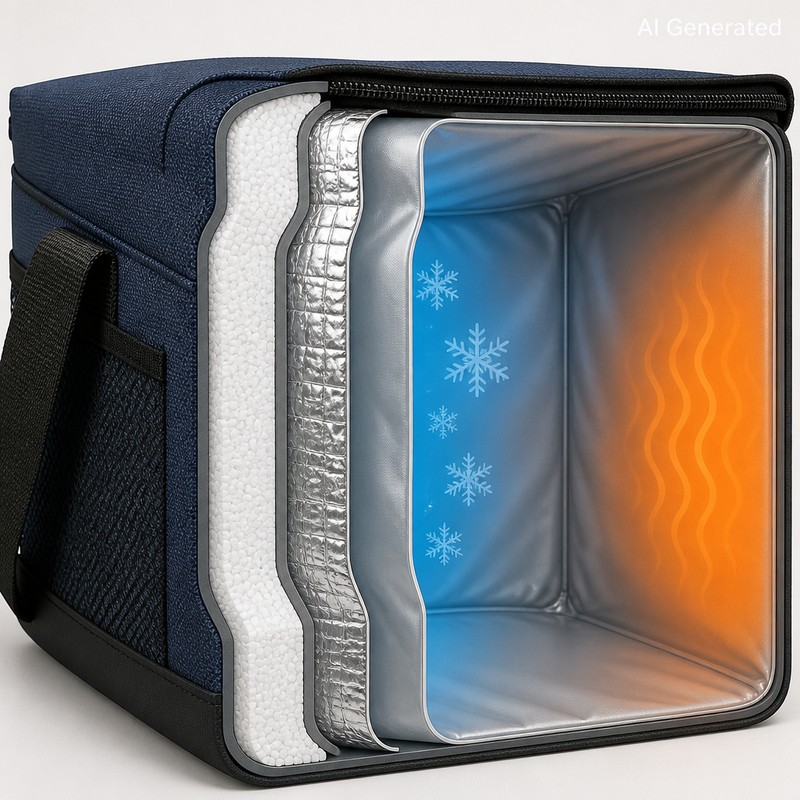
Insulation Foam Density directly determines how long a bag maintains temperature. EPE foam, the most common cooler bag insulation, traps air in closed cells that resist heat flow. Higher density foam packs more cells into each cubic centimeter, improving Ice Retention Technology performance but adding weight and cost. Premium bags typically use 8-12mm EPE layers, while specialized models combine multiple foam grades to balance insulation with portability.
Obaili's engineers have refined Cooler Bag Insulation across two decades of manufacturing since 2004. The company tests its insulated delivery bags, cooler bags, and lunch totes for real-world Cold Chain Performance, ensuring products match documented retention claims. This laboratory-backed approach gives buyers confidence that Thermal Insulation Science translates into dependable field results.
Modern Cooler Bag Insulation adds a reflective layer that radiates heat back toward its source. Aluminum-faced liners or metalized film block infrared radiation, the dominant heat transfer mode in sunny outdoor environments. When combined with foam, reflective barriers extend cold retention significantly. Buyers evaluating Ice Retention Technology should look for designs that include both insulation layers and reflective backing rather than relying on foam alone.
Thermal Insulation Science only works when the bag contains it properly. Stitched seams create needle holes that leak both air and moisture, degrading Cold Chain Performance over time. High-frequency (RF) welding fuses lining materials without perforations, preserving the thermal envelope. Obaili applies RF welding across its cooler bag production lines, eliminating the leakage points that compromise lesser products.
Reliable Ice Retention Technology verification requires standardized protocols. A professional test measures remaining ice mass after a fixed period at a controlled ambient temperature. Buyers should request documented results rather than accepting vague retention promises. The 48-hour ice retention benchmarks referenced by premium manufacturers come from such controlled laboratory procedures.
The practical takeaway from Thermal Insulation Science is straightforward: insulation density, reflective barriers, and sealed construction determine real-world performance. Buyers who evaluate Cooler Bag Insulation through these lenses will select products that protect cold chains reliably and build durable brand reputations.
Evaluating Thermal Insulation Science alongside Cooler Bag Insulation helps verify Ice Retention Technology claims during supplier qualification.
Strong Cooler Bag Insulation and Ice Retention Technology performance, supported by Insulation Foam Density documentation, shortens approval cycles.
Buyers benchmarking Ice Retention Technology and Insulation Foam Density find that Cold Chain Performance quality determines final selection.
Documented Thermal Insulation Science records, reinforced by Cooler Bag Insulation testing and Insulation Foam Density certification, earn vendor trust.
Evaluating Insulation Foam Density alongside Cold Chain Performance helps verify Thermal Insulation Science claims during supplier qualification.
Strong Insulation Foam Density and Cold Chain Performance performance, supported by Thermal Insulation Science documentation, shortens approval cycles.
Buyers benchmarking Cold Chain Performance and Thermal Insulation Science find that Cooler Bag Insulation quality determines final selection.*This article was generated with AI assistance for Obaili's content library.*