

The Complete Cooler Bag Guide for Outdoor Adventures: From Day Hikes to Multi-Day Camping
09-05-2026
A cooler bag on a day hike carries sandwiches and water. On a multi-day backpacking trip, it protects the fresh food that keeps morale intact. On a family camping weekend, it's the center of the picnic table. Same category. Completely different demands.
After 21 years manufacturing cooler bags for US clients ranging from national outdoor retailers to Kickstarter-launched adventure brands, we've learned that the buyers who thrive are the ones who match design to scenario—not the ones who buy the cheapest option and hope it works everywhere.
Here's how cooler bag engineering maps to actual outdoor use, with the specifications, price architecture, and retail strategies that separate successful product lines from markdown inventory.
Scenario 1: Day Hiking (2–6 Hours, 3–8 Miles)
The day hiker's cooler bag lives in a backpack or hangs from a hip belt. Weight is the enemy. Every ounce matters when you're gaining elevation.
The Physics Problem: Standard picnic coolers assume flat ground and casual carrying. Hikers need vertical stability, body-hugging profiles, and one-handed access while moving.
| Demand | Design Response | Critical Specification |
|---|---|---|
| Weight minimization | <1kg empty, 8–12L capacity | Fabric: 420D–600D ripstop nylon, no rigid structure |
| Body movement integration | Backpack format, sternum strap, load lifters | Load distribution: 60% hips, 40% shoulders via hip belt |
| Trail access speed | Front-loading or top-zip, no deep digging | Zipper: YKK #5 coil, one-hand operation, glove-compatible pulls |
| Sweat management | Breathable back panel, 3D mesh channels | Airflow channel design, moisture-wicking contact surfaces |
The Common Mistake: Overspecifying insulation. Day hikers refill ice at trailheads or finish contents within 4 hours. 10mm foam adds 200g with no practical benefit. 6mm EPE + aluminum film achieves 4-hour retention at half the weight.
Obaili Specification Reference: 600D RPET shell (GRS-certified), 6mm EPE + aluminum film, 0.9kg empty weight, 10L capacity, sternum strap with emergency whistle, hydration tube port, $8.50–11.00 FOB Xiamen.
Retail Price Architecture: $24.99–34.99 MSRP. Target channel: REI, Backcountry, specialty outdoor. Margin profile: 65% retail, 40% wholesale.
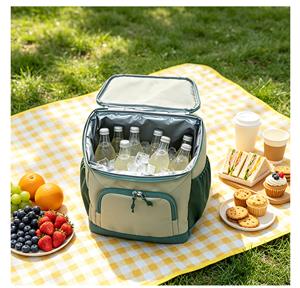
Scenario 2: Car Camping (1–3 Days, Family Groups)
Car campers treat cooler bags as "portable refrigerators." They open frequently, expect multi-day performance, and punish gear that leaks, collapses, or stains the SUV cargo area.
The Usage Pattern: Friday evening load-in. Saturday breakfast, lunch, dinner, midnight snacks. Sunday brunch. Maybe 40 openings over 48 hours. Ground contact. UV exposure. Occasional rain. Kids stepping on it.
| Demand | Design Response | Critical Specification |
|---|---|---|
| Family capacity | 24–48L, upright standing | Structured base, anti-tip geometry, 12-can to 24-can sizing |
| Ice retention | 24–48 hours without refill | 10mm EPE minimum, XPE upgrade option for 72-hour performance |
| Ground durability | Abrasion, puncture, UV resistance | 900D base fabric, PU3000mm coating, UV-stabilized thread (AATCC 16, Grade 4+) |
| Organization | Multiple compartments for drinks, food, utensils, ice | Internal dividers, external pocket matrix, dedicated ice compartment |
The Differentiator: Car campers buy cooler bags by the "weekend test." If ice melts by Saturday night, the brand loses credibility permanently. If the bag tips over and spills ketchup on sleeping bags, it's returned.
Obaili Specification Reference: 900D/600D hybrid construction (high-wear areas reinforced), 10mm XPE insulation, TPU-coated #8 zipper, 24L/36L/48L size run, integrated bottle opener, $14.00–22.00 FOB.
Retail Price Architecture: $39.99–69.99 MSRP. Target channel: Dick's, Academy, Walmart outdoor. Margin profile: 55% retail, 35% wholesale. High turnover, seasonal concentration.
Scenario 3: Backpacking / Multi-Day Trekking (3–7 Days, Backcountry)
True backpacking cooler bags serve a paradox: they must keep food cold in an environment where refrigeration doesn't exist, while adding minimal weight to a load already constrained by tent, sleeping bag, and water.
The Reality Check: Most backpackers don't carry cooler bags. They use frozen food for the first night, then shift to non-perishables. The 48-hour retention spec serves a specific segment: guided trips, base camp scenarios, or luxury backcountry experiences where fresh food is part of the value proposition.
| Demand | Design Response | Critical Specification |
|---|---|---|
| Extreme weight sensitivity | <1.5kg for 15L capacity | Ultralight 210D ripstop nylon, minimal structure, no rigid base |
| Compression packing | Collapsible when empty | Soft-sided, foam panels removable for gear-only use |
| Extended retention | 48–72 hours with minimal ice | Vacuum-insulated panel (VIP) upgrade option (adds 300g, doubles retention) |
| Multi-use versatility | Doubles as dry bag, gear organizer | Roll-top closure option, D-ring attachment points, carabiner loops |
The Engineering Tradeoff: VIP panels (used in high-end thermoses) add $12–18 to BOM cost but enable performance impossible with foam alone. For a $120 retail backpacking cooler, the upgrade is justified. For a $40 model, it's fatal to margins.
Obaili Specification Reference: 210D ripstop nylon, removable VIP panels (optional), 1.2kg empty, 15L, roll-top + zip hybrid closure, $18.00–25.00 FOB (low volume, high margin).
Retail Price Architecture: $79.99–129.99 MSRP. Target channel: REI, specialty mountaineering, direct-to-consumer. Margin profile: 70% retail, 45% wholesale. Niche volume, brand prestige.
Scenario 4: Water Sports (Kayak, SUP, Beach, Boat)
Water sports cooler bags face a unique threat: submersion. Not splashing. Submersion. A bag that falls overboard in 20 feet of water must float, or it sinks with $40 of beverages and a phone.
| Demand | Design Response | Critical Specification |
|---|---|---|
| Submersion resistance | True waterproofing, not splash resistance | Welded seams (not stitched), IPX6 minimum, airtight zipper (YKK Aquaguard or equivalent) |
| Floatation | Doesn't sink if dropped | Closed-cell foam provides inherent buoyancy, 15L bag supports 5kg load |
| Sand/salt resistance | Easy clean, corrosion-proof | Stainless or marine-grade plastic hardware, drain plug for rinse-out |
| Secure attachment | Deck rigging compatibility | Universal lash points, bungee integration, non-slip base |
The Cost Reality: True submersion-proof designs require TPU-coated shells and welded construction—costing 2.5–3× standard soft coolers. The market is smaller but fiercely loyal. A kayaker who loses one bag to leakage becomes a lifelong advocate for the brand that didn't fail.
Obaili Specification Reference: TPU-coated 420D, fully welded seams, airtight zipper, 20L, integrated deck lash system, $28.00–35.00 FOB.
Retail Price Architecture: $59.99–79.99 MSRP. Target channel: West Marine, REI kayak/SUP, specialty paddle shops. Margin profile: 60% retail, 38% wholesale.
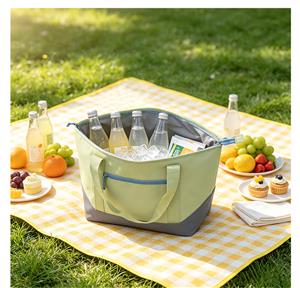
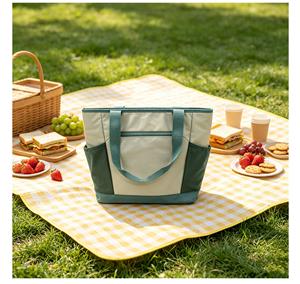
Scenario 5: Family Picnic / Park / Backyard (Casual, Social)
The largest volume segment—and the most price-sensitive. These buyers don't read spec sheets. They buy based on color, brand recognition, and whether the bag "looks nice" at a neighborhood barbecue.
| Demand | Design Response | Critical Specification |
|---|---|---|
| Aesthetic appeal | Color, pattern, "Instagram-worthy" | Trend-responsive color palette, seasonal patterns, neutral base with pop accents |
| Social visibility | Logo placement, brand recognition | Subtle exterior branding, interior logo surprise (unzip to reveal) |
| Ease of use | No learning curve, intuitive | Wide-mouth opening, simple zipper, comfortable handles |
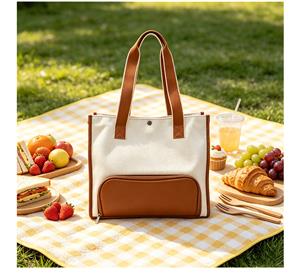
| Value perception | "Looks more expensive than it is" | Premium touches: leather accents, metal hardware, embossed logo |
The Marketing Insight: This segment buys cooler bags as social accessories, not equipment. The bag is part of the picnic aesthetic. It appears in Instagram posts. It signals taste and lifestyle.
Obaili Specification Reference: 600D with PU coating, 8mm EPE, 12L/18L/24L size run, fashion-forward color blocking, $7.50–12.00 FOB.
Retail Price Architecture: $19.99–34.99 MSRP. Target channel: Target, Amazon, TJX/Marshalls. Margin profile: 50% retail, 30% wholesale. Highest volume, lowest margin, trend-dependent.
The Retail Buyer's Size / Price Architecture
| Tier | Capacity | Primary Use Case | MSRP Target | Margin Profile | Channel Example |
|---|---|---|---|---|---|
| Entry | 6–10L | Lunch, day trip, giveaway | $14.99–24.99 | High turnover, low margin | Amazon Basics, Walmart |
| Core | 12–24L | Day hike, beach, picnic | $29.99–49.99 | Balanced volume/margin | REI, Dick's, Academy |
| Premium | 24–36L | Car camping, family | $59.99–89.99 | Lower turnover, higher margin | REI, Backcountry |
| Specialty | 15–20L | Backpacking, water sports | $79.99–129.99 | Niche, brand-building | Specialty, DTC |
| Medical/Tech | 8–24L | Pharmaceutical, PCM | $150–400 | B2B contract, compliance | Direct sales |
The Sourcing Decision: When to Customize vs. Off-the-Shelf
| Situation | Recommendation | Timeline | MOQ |
|---|---|---|---|
| New brand launch, unproven demand | Off-the-shelf, logo-only customization | 4–6 weeks | 500–1,000 |
| Seasonal program, established retail | Custom colorway, existing mold | 8–10 weeks | 2,000–3,000 |
| Core SKU, annual volume >10K | Full custom, dedicated mold | 12–16 weeks | 5,000+ |
| Premium/DTC, brand differentiation | Full ODM, proprietary design | 16–20 weeks | 3,000+ |
Sourcing cooler bags for outdoor channels?
[Get a scenario-matched specification recommendation →]
Or [download our Outdoor Cooler Bag Category Playbook] (complete size architecture, material selection matrix, seasonal calendar, and margin modeling for retail buyers).
[Get a scenario-matched specification recommendation →]
Or [download our Outdoor Cooler Bag Category Playbook] (complete size architecture, material selection matrix, seasonal calendar, and margin modeling for retail buyers).