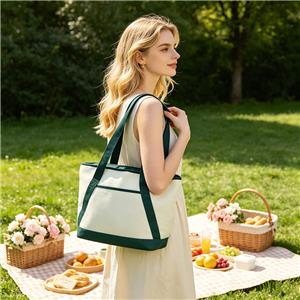
There exists a certain threshold—a moment when the walls of routine feel too close and the horizon begins to whisper invitations. For some, that threshold arrives on a Tuesday afternoon when sunlight slants through office blinds at an angle that promises warmth. For others, it is the first Saturday of spring, when the air carries a scent of thawed earth and possibility. Wherever and whenever that call arrives, the answer is almost always the same: pack your essentials, step outside, and let the world remind you how to breathe. But stepping outside is only the beginning. What you carry with you—and how well it performs—determines whether the day unfolds as a cherished memory or a logistical headache. This is where the coastal cooler tote earns its place in your story.
I. A Design Language of Confidence
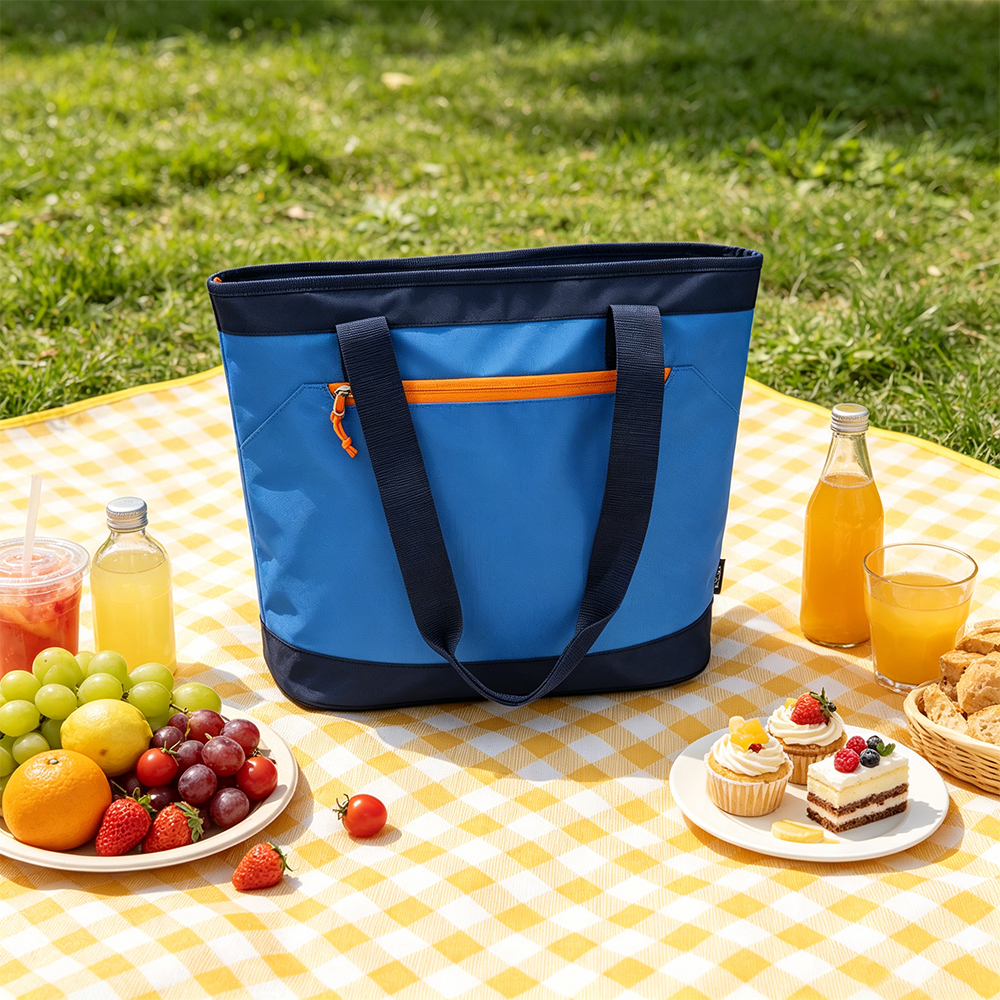
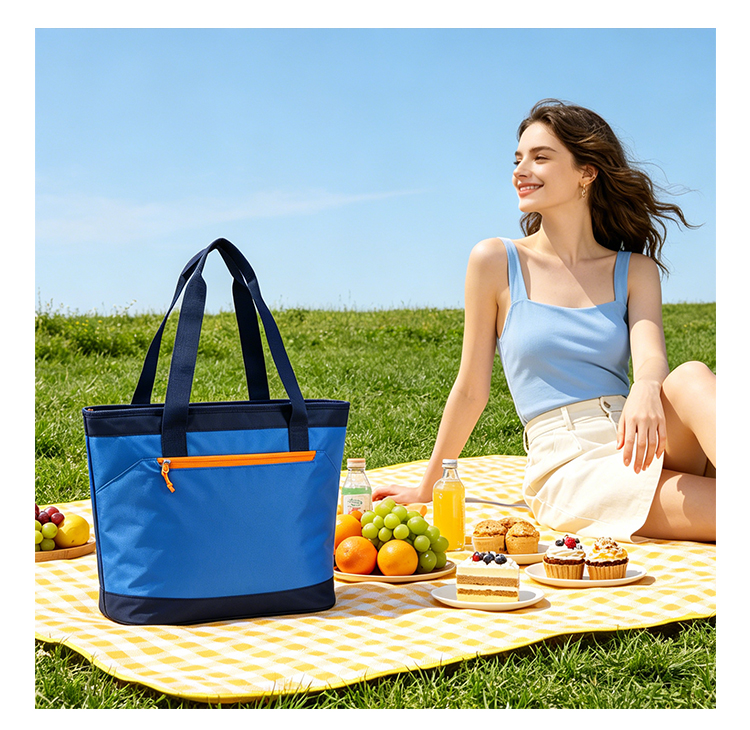
The visual identity of this tote is immediately striking without being loud. A bold, saturated blue dominates the body—a shade that evokes open water and cloudless skies, a color that seems to belong naturally to outdoor settings. This vibrancy is anchored by a deep navy band that encircles the base and traces the upper rim, creating a visual frame that adds sophistication and conceals the inevitable scuffs of real-world use. The overall silhouette is that of a classic tote, generous in proportion, open in spirit, yet structured enough to stand upright when set down on uneven ground.
The carrying system reveals a philosophy of comfort-first engineering. Dual shoulder straps rise from the body with a width that immediately signals quality—no narrow ribbons that dig into flesh, no flimsy webbing that twists under load. These straps distribute weight across a broad surface area, transforming what could be a burdensome haul into a comfortable carry. Whether you are navigating a crowded farmers' market, crossing a stretch of soft sand, or walking a gravel path to a hidden cove, the straps remain unobtrusive and supportive. The top opening is generous, a wide zippered mouth that allows you to see and access everything inside without the frustrating archaeology of deep, narrow bags.
A front zippered pocket, accented with a warm orange zipper pull, provides immediate staging for the small essentials that would otherwise vanish into the main compartment. Keys, a phone, lip balm, a packet of hand wipes—these live in the front pocket, accessible in seconds without disturbing the thermal seal of the interior.
II. The Thermal Core
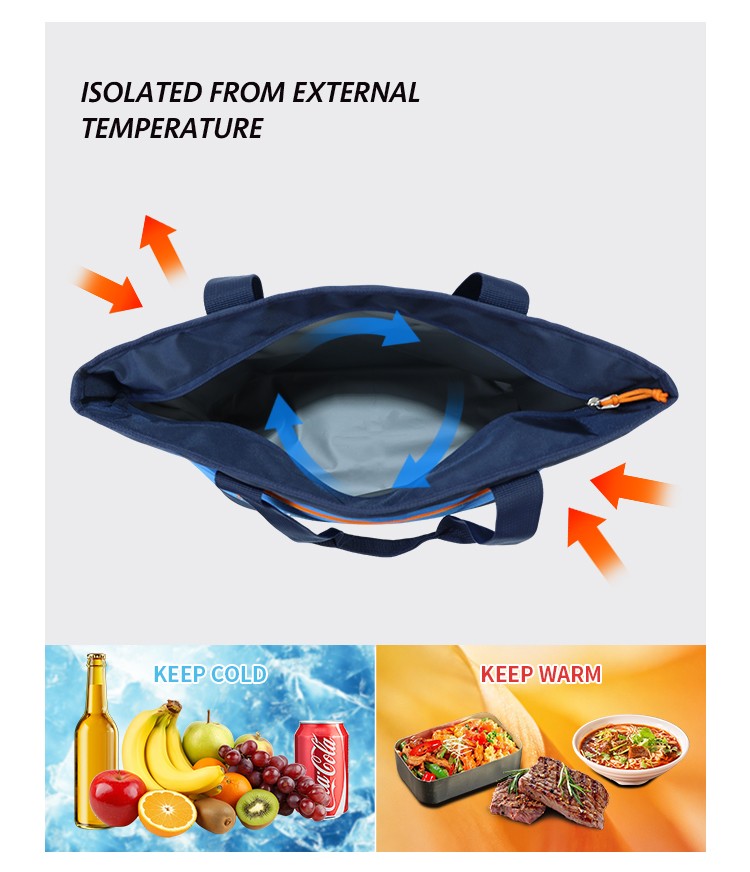
The true character of this tote reveals itself only when you look inside. The interior is lined with upgraded PEVA, a food-safe thermoplastic that represents the current state of the art in portable insulation. Unlike earlier generations of vinyl-based liners that raised concerns about chemical stability and environmental persistence, PEVA offers a clean, inert surface that meets rigorous food-contact standards. Its smooth, slightly reflective surface does more than simply contain your provisions—it actively participates in temperature management by reflecting thermal radiation rather than absorbing it.
This lining works as part of a layered defense system. The outer shell is woven from a water-resistant fabric that sheds light rain, splashes, and ground moisture. Beneath that shell, a dense foam core interrupts conductive heat transfer—the physical movement of thermal energy through solid materials. Finally, the PEVA barrier reflects radiant heat back toward the interior, creating a passive cooling effect that requires no electricity, no ice packs, and no mechanical intervention. The result is a stable microclimate that resists the fluctuations of the surrounding environment for hours at a time.
The zipper closure is not an afterthought. It seals with a precision that minimizes air exchange, the silent enemy of thermal stability. Every time a lesser bag gapes open, warm air rushes in and cold air escapes, accelerating the degradation of your carefully prepared provisions. This tote's zipper fights that battle at every seam, maintaining the integrity of the internal environment through movement, jostling, and repeated access.
III. The Picnic as Ceremony
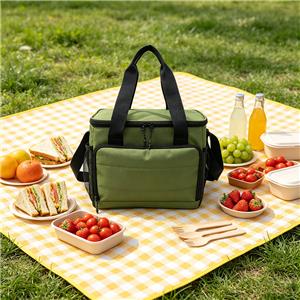
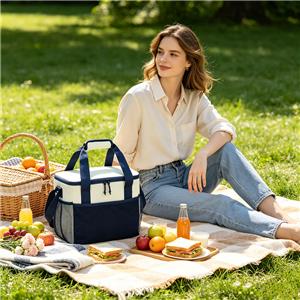
Outdoor dining has transcended its casual origins. The contemporary picnic is a deliberate act, a form of mobile theater where setting, menu, and company converge into something greater than the sum of its parts. You do not simply "have a picnic." You compose one. You scout a location for its quality of light, its acoustic privacy, its view across a valley or along a shoreline. You curate a menu that balances visual appeal with transport resilience—dishes that will survive the journey and reward the effort upon arrival.
For this level of intentionality, you require equipment that respects your preparation. The generous proportions of this tote accommodate the containers and vessels of modern outdoor cuisine. A rectangular glass dish of layered ratatouille sits level and stable. A bottle of chilled white wine, wrapped in a thin insulating sleeve, rests beside a wheel of soft-ripened cheese without rolling or clinking. A container of marinated olives, a baguette wrapped in linen, a small jar of lemon curd for spreading on shortbread—these find their places with room to spare.
The front pocket becomes your service station: a corkscrew, cloth napkins, a small cutting board, perhaps a portable speaker for ambient music. Arrival at your chosen location unfolds with quiet satisfaction. The blanket spreads, the containers emerge in pristine condition, and you realize that nothing has wilted, nothing has warmed prematurely, nothing has leaked. The water-resistant fabric has already proven its worth if dew still clings to the grass. A quick wipe, and the tote looks as composed as when it left your kitchen.