
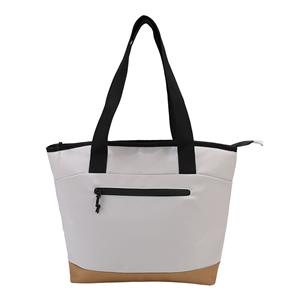
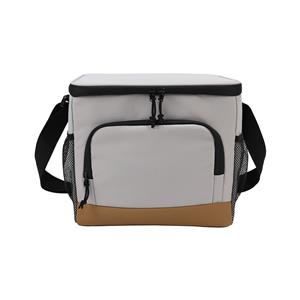

Holiday Returns and Reverse Logistics: Protecting Cooler Bag Margin After December

The holiday return rate is determined by specification and listing decisions made months before December, not by customer service effort in January. A holiday return rate driven by dimension mismatch cannot be recovered by a generous refund policy. Buyers should therefore compare the holiday return rate against the reason codes recorded during returns processing. Retail buyers should model the holiday return rate against contribution margin rather than against revenue, because returns consume freight twice. A holiday return rate appearing acceptable on paper can still erase the profit from a promotional price tier. Modelling the holiday return rate per SKU separates products carrying margin from products absorbing cost. Reverse logistics cost belongs in the same model.
Reverse Logistics Cost Structure in Q4
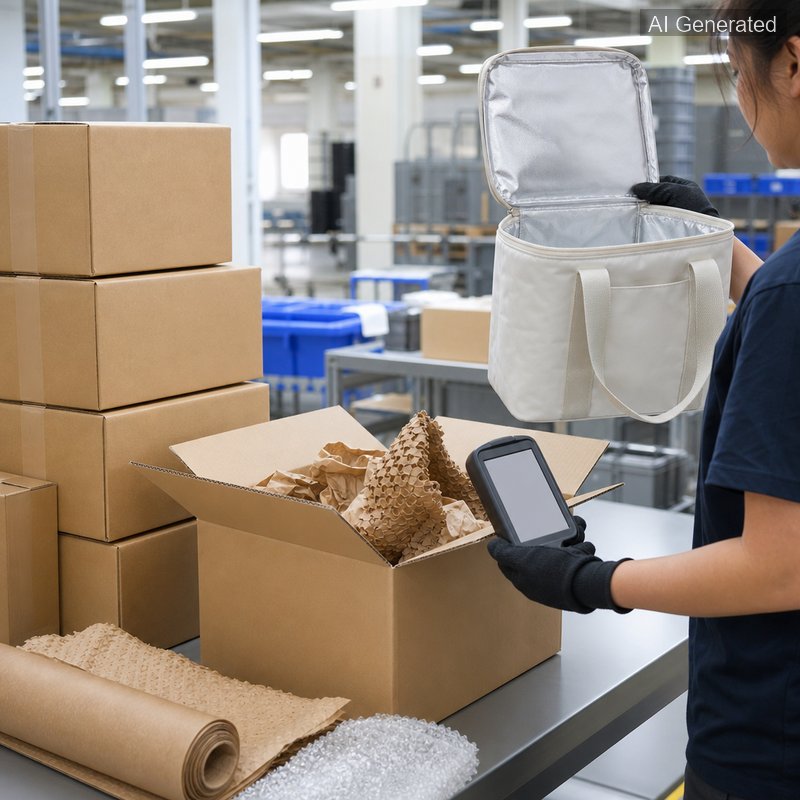
Reverse logistics carries a fixed component per parcel and a variable component driven by condition on arrival. Reverse logistics for insulated goods adds inspection effort, because a used bag cannot always be resold. Planning reverse logistics around consolidation reduces per-unit handling compared with individual parcel returns. A reverse logistics process routing returned stock to a central point protects margin better than store-level disposition. Buyers modelling reverse logistics should include the cost of destroyed units, not only the cost of transport.
Cooler Bag Durability as a Return Driver
Cooler bag durability problems surface after gifting, when the recipient begins daily use. A cooler bag durability failure in the zipper or base seam produces a return beyond dimension error. Buyers should specify cooler bag durability through cycle testing rather than through visual inspection alone. Cooler bag durability claims should match the tested construction, because an overstated claim invites disputes and chargebacks. Documenting cooler bag durability test parameters supports any later claim against the factory.
Returns Processing Discipline and Data
Returns processing generates the data revealing which specification caused the loss. A returns processing log recording reason codes, condition grade, and batch reference converts complaints into actionable feedback. Returns processing recording only quantity without reason codes cannot guide a specification change. Buyers should require returns processing summaries at the SKU level, not at the category level. Consistent returns processing discipline also deters fraudulent claims through photographic evidence standards.
Product Listing Accuracy as the Cheapest Lever
Product listing accuracy prevents more returns than any post-sale intervention. Product listing accuracy depends on stating usable interior volume instead of external dimensions. A listing with accurate capacity, weight, and loaded photography reduces the gap between expectation and delivery. Product listing accuracy should extend to colour representation, since lighting changes perceived tone on dark fabrics. Reviewing product listing accuracy before each season outperforms correcting listings after complaints appear.
Building a Returns Plan With the Supplier
A returns plan agreed with the supplier defines responsibility before the season begins. Suppliers should confirm which defect categories are accepted as production faults, so returns processing disputes resolve against a written standard. Cooler bag durability test reports support the supplier in rejecting misuse claims and support the buyer when a genuine fault recurs. Reverse logistics data shared with the supplier shortens the correction cycle for the following season. Obaili provides heavy metal testing documentation from an in-house laboratory and coordinates hexavalent chromium analysis through partner laboratories.
*For more information about Obaili's cooler bag manufacturing capabilities, visit www.obaili.net.*